Tuesday, August 9, 2011

The house specialty at Vila Chaumieres

Had a lovely meal out at Vila Chaumieres which is this small but atmospheric restaurant situated on the Erakor Lagoon.  It is highly recommended for its house specialty 'Coconut Crab'.  Monster crabs that consume coconuts so you can imagine the size of their claws - wouldn't like to come across one in real life while sun baking on the beach!


My one was smothered in garlic, yummy! could only use hands thus the shot.

Vila Chaumieres on the lagoon


Having mocktails!


My Coconut Crab before it was consumed


Mummy was hungry! garlic crab hands


Education isn't cheap

Mele Community Kindergarten
Hollander and I visited a local school with some other kids from the resort.  We sat in with them and listened to some of their songs and then had a play outside together.  It was a great experience, in Vanuatu education isn't free and for most families its hard to keep a number of children at school not many get higher education as helping the family with crops or earning an income is more essential.  The teachers we met had been given scholarships from Australian organisations to complete their training.  


Welkam to Vanuatu!

Our Island Girl!

We had a weeks holiday in Vanuatu in July which was fantastic! the people and the islands are so relaxed, friendly and beautiful.  Would have been happy to be marooned a while longer there!


Cheesy grins

Vanuatu is only a 3 hr flight away and is really easy to get around. It is a collection of 83 islands the main ones being Efate (Port Villa is the main town), Espiritu Santo, Malakula and Tanna. The ni-Vanuatu people are a Melanesian race, speaking Bislama a unique language mixed with Vanuatu versions of local, French and English languages. The population is around 200,000 people. 

Traditional fishing

Vanuatu was first discovered by European Spanish explorers in 1606, then Cook in 1774 who named the islands New Hebrides.  Then in 1848 the first missionaries arrived, settlement lead to the introduction of disease and a huge population decline. But they stopped the cannibalism and even though the country is very Christian (evident by the number of churches and missionary institutions) the people have still maintained a lot of their traditional ways and culture (kastom).  In 1906 the British and French shared powers over Vanuatu which lead to the French influence, and then in 1980 Vanuatu gained its independence. History in a nut shell!

Little kids on Tanna Is

Market in Port Villa

Amazingly to our eyes the people have still maintained their traditional village life, obviously they are a poor nation and housing is typically woven palm leaf in the country areas, they also live simply growing their own food and selling surplus at the markets or road side stalls. They have chickens and pigs wandering around for fresh protein and fishing is a pass time.  Tourism is becoming a major employer, lots of taxi drivers that can take you around the island cheaply and tour groups.  So far no horrible Western chain stores yet.  We found out that the people don't pay taxes so it is a user pays system which means education and health is not always accessible for everyone. They do pay sales tax on goods purchased but theres not much shopping here. You realise how lucky you are when you take it for granted the free health and education like in Australia.

However they say Vanuatu is the happiest country in the world, and we can see the benefits of living a simple life.  We certainly enjoyed out time here.

Catching the ferry to Erakor Is

So what did we do, we stayed out of town at Le Lagon a resort which was nice but found ourselves venturing out every day to explore.  I did have visions originally when booking the holiday of lounging around, reading a book and soaking up the sun, but there was so much to do! We hung out on Erakor Is alot, went to Hideaway Is to go snorkeling and post a water proof post card in the underwater post box, flew to Tanna Is to see up close the active volcano and explored the Mele Cascade falls.  We are definitely going back!


Hanging at Hideaway Is!


Tuesday, June 14, 2011

Shanghai part 2


With cousin Flynn and hamster!
 Shanghai to be continued....
This is a tack on for the previous post on Shanghai (as I was having difficulties in China with the Blog) so this will include the photos of stuff mentioned before.

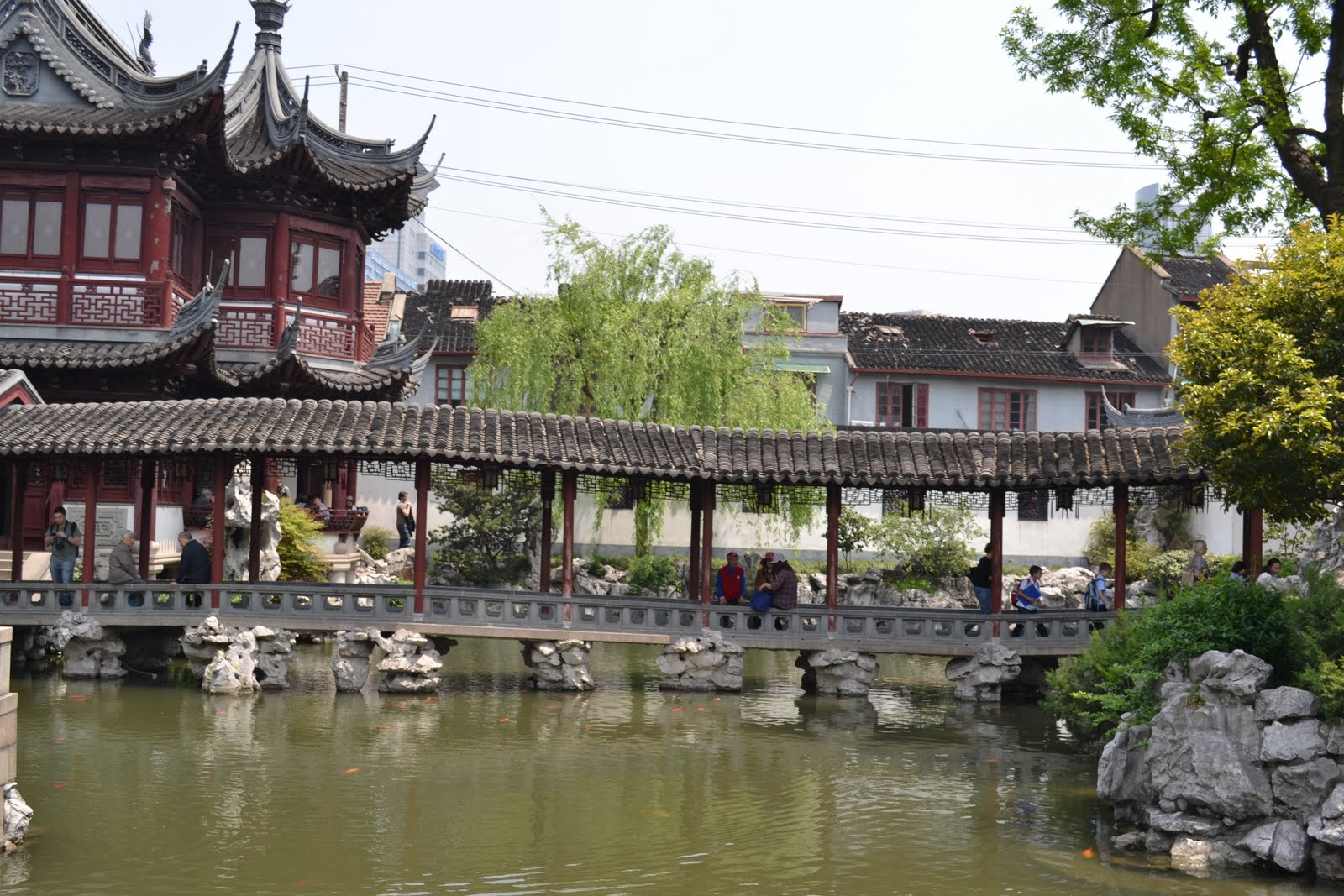
Yuyuan Bazaar

Huxinting Teahouse with the zigzag bridge to keep away evil spirits.
Yuyuan Gardens
City lights in the Pudong


Pearl Tower at night

Wacky tourist tunnel lights!

Last night out with our tour families.

Hollander and Hannah dressed up for dinner.
Shanghai was the end of our trip so after leaving the tour group we stayed in a hotel for 4 days that we found our selves on the Internet which was fantastic called The Astor House Hotel.  We weren't sure that the booking was confirmed as no money was taken for a deposit when I phoned them but we had the perfect luxury room with extras in a lovely old sandstone building next to the Bund for the price of an ordinary hotel room in Australia (don't book on the net as the rate is ridiculous we paid $240 for an executive suite with breakfast and access to an executive lounge with extra food on tap for all of us - great!)


Our room at The Astor -felt pretty special.

The lobby at The Astor

The Astor House Hotel was the first western hotel established in China in 1846 on the Bund in Shanghai, (now known as the Pujiang Hotel in Chinese since 1959) it was once described as "one of the most famous hotels of the world", "the pride of Shanghai" and "the most luxurious hotel in the world", the architecture reflects the concession eras old world European influence.  The Lonely Planet comically describes it as 'British public school meets Victorian asylum' - with its polished floors, doormen in suit and tails, it certainly had lots of character. 

The Peacock Room

The Bund

Mummy on The Bund
The hotel was an experience that's why I'm mentioning it,  past famous guests included Albert Einstein and Charlie Chaplin (you could pay to stay in one of their rooms) and the dining room had to be seen to be believed - breakfast was served in the 'Peacock Room' - the original dance hall with chandeliers, grand ceilings and the old boxes (it was called the Peacock Room because the stage was backed by an arched coloured stain glass peacocks plumage). I had visions of flappers doing the Charleston right were I was sitting! It was really nice to get a taste of what it might of been like in its hey day.

From here we did our day trip to Zhujiajiao, explored the Bund and shops, and caught up with the cousins. 
Pearl tower and also the 'bottle openner' in back ground -tallest building in China


View from the Pearl Tower

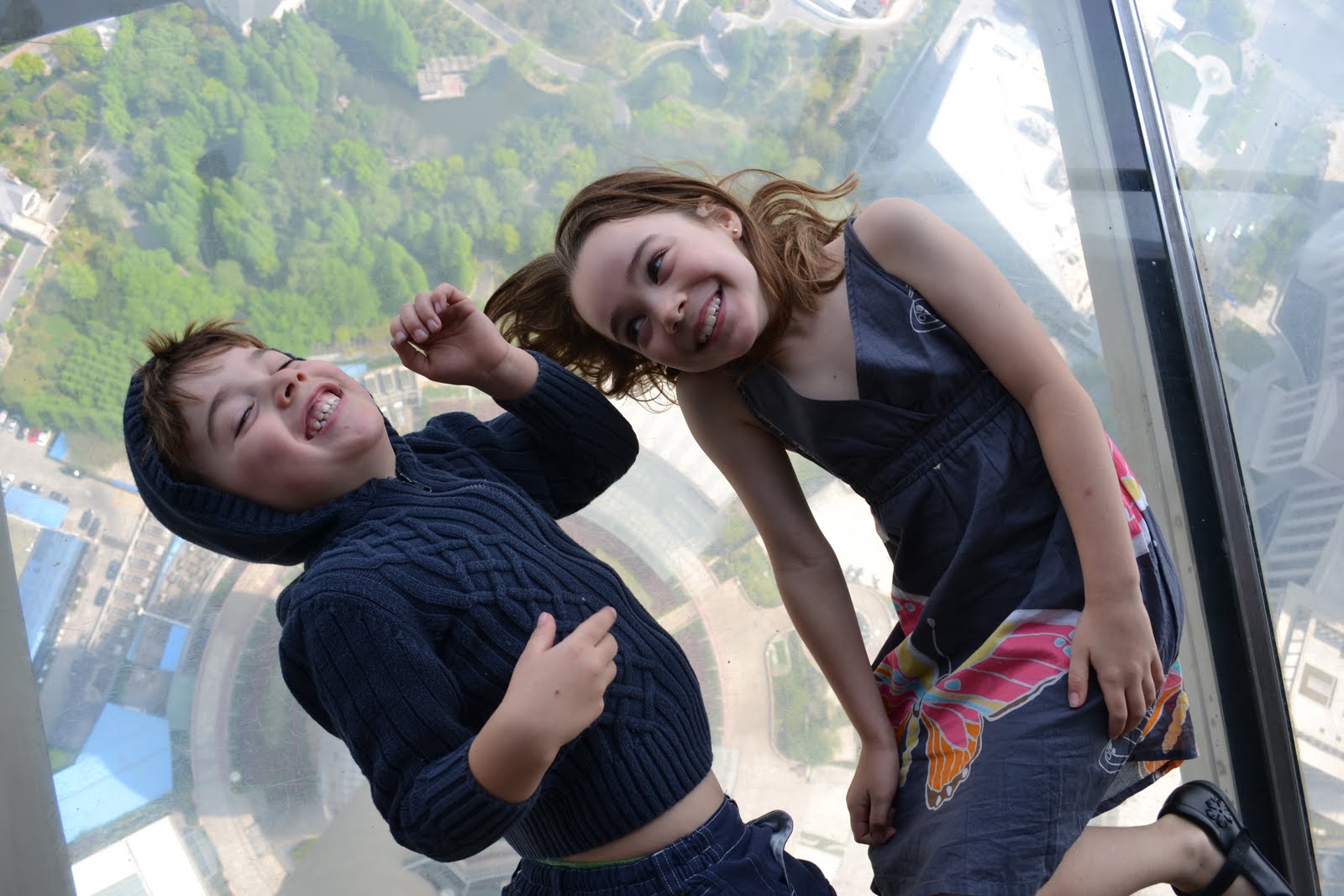
Sprogs pretending to free fall

Convincing mummy to free fall

Is that you Marilyn?

We had a great time in China and we felt as though we had seen a lot. However it took some time to recover on returning home, the experience raised some concerns about our future as a nation and the future of the world.

I walked away with concerns about our environmental impact, it is in your face while you are there the impact of a developing country's break neck desire to get rich on the environment.  The lack of industry regulation was evident in the air that we had to breath in some regions and was spelt out in one of the news papers we were reading there that quoted a Government official stating that they would not address environmental issues until the West did, and that they wanted to focus on becoming a rich nation.  Some may argue that the West went through the same process 200 years ago when it entered the Industrial Revolution but we have different standards now.  I also felt guilty about the 'junk rubbish' that we import and buy in Australia - the cheap plastic toys that last a day from the '2 dollar shops' and also Australia's dependence on selling non renewable resources - coal - to be burnt in furnaces that provides the energy to make the junk.  Bit of a vicious circle to be stuck in!

Then I started to get worried about how small we were as a nation 22 million is nothing compared to China's 1.4 billion.  Julia Gillard was visiting when we were there and it was in the paper I read that she had signed off on allowing military maneuvers to occur in Australia with China.  Makes you think about the politicking involved in international trade and why nations like China feel they don't have to sign a Kyoto accord.  And why don't we have greater controls over foreign ownership of land and subsequently natural resources? maybe I'm crazy but it seems we are selling ourselves off.

Any way I get passionate about things sometimes and now feel abit overwhelmed about it all.  You just hope that it all works out and that instead of exporting coal we will develop an even greater commodity to export - why aren't we leaders in Solar panel technology.

I'm getting off the soap box now and saying that we had a great time, the kids loved it and I would highly recommend it. I just wish that the rate of making environmental and humanitarian changes could also meet the rate of rapid industrialisation.

How Oren saw most of China!

The Petersen log will next be featuring Vanuatu in July (thank goodness I'm finally up todate) where we will be relaxing in the sun for a week and trying a bit of French, checking out the Cascade Falls, and going to Tanna Island to see the active volcano up close.


Bye for now,


Susan and the gang!

The 'Silk Road' not so less travelled!


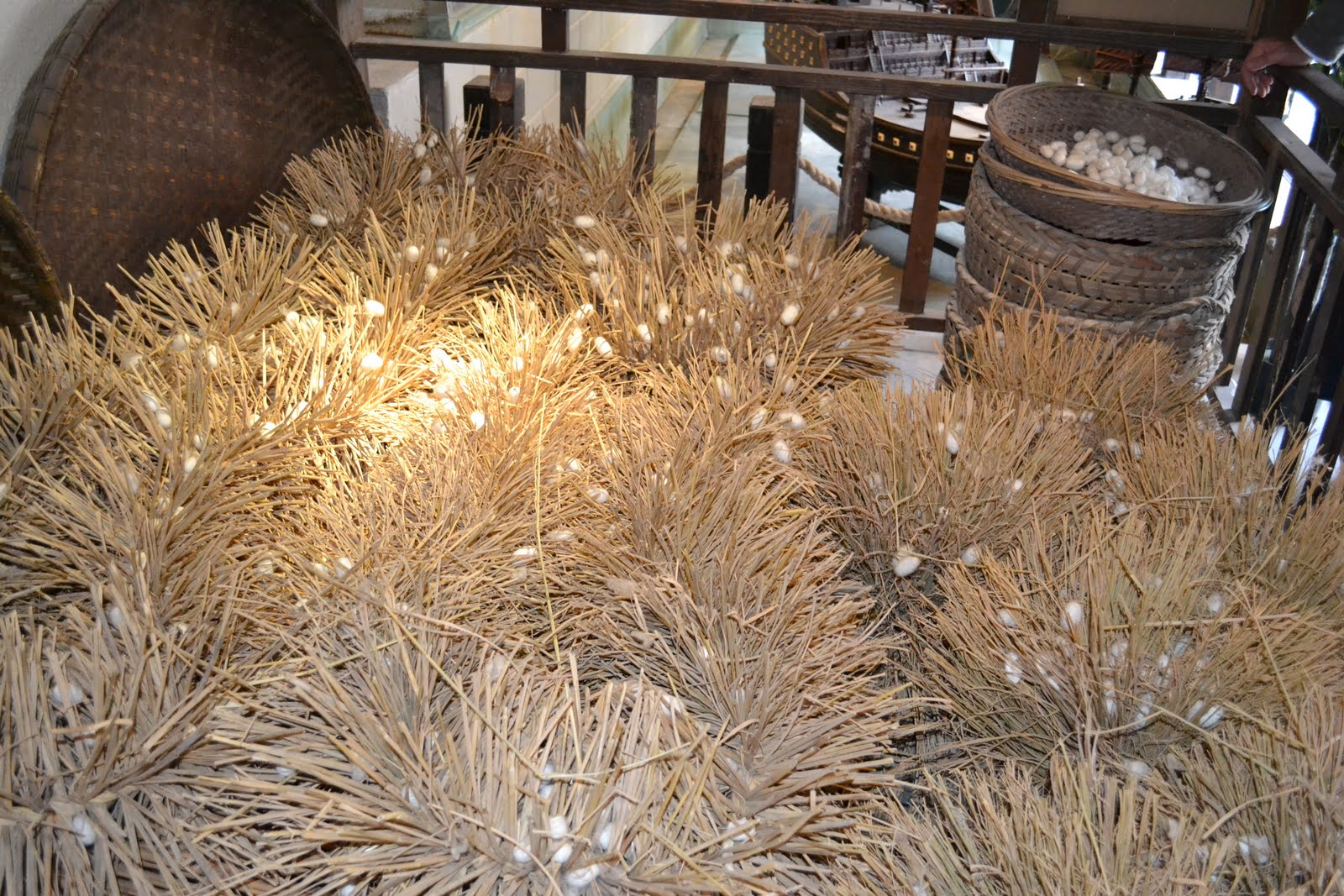
Traditional cocoon bed

While in Shanghai we went to a Silk factory and learnt about silk production. We saw how the cocoons are first boiled and how the threads - which are 1 kilometer long - are extracted with a brush and then thread onto the spinning machine to make the weaving fibre.  Cocoons are also stretched to form layers for quilts etc by stretching the intact cocoon firstly over a bamboo hoop then even further by hand with a group of workers. Ingenious!

Spinning the thread

The brush captures the silk thread

The legend of silk production in China is fascinating apparently Empress Hsi Ling Shi, wife of Emperor Huang Ti (also called the Yellow Emperor), was the first person to accidentally discover silk as weavable fiber.
One day, when the empress was sipping tea under a mulberry tree, a cocoon fell into her cup and began to unravel. The empress became so enamored with the shimmering threads, she discovered their source, the Bombyx mori silkworm found in the white mulberry. The empress soon developed sericulture, the cultivation of silkworms, and invented the reel and loom. Thus began the history of silk.


Whether or not the legend is accurate, it is certain that the earliest surviving references to silk history and production place it in China; and that for nearly 3 thousand years, the Chinese had a global monopoly on silk production.

Stretching the cocoon over bamboo.

Workers stretch the cocoon 'sock' even further

The kids have a turn.

Its really strong! many layers make a quilt. 


Though first reserved for Chinese royalty, silk spread gradually through the Chinese culture both geographically and socially. From there, silken garments began to reach regions throughout Asia. Silk rapidly became a popular luxury fabric in the many areas accessible to Chinese merchants, because of its texture and luster.


Demand for this exotic fabric eventually created the lucrative trade route now known as The Silk Road, taking silk, porcelain and jade westward and bringing gold, silver, Arab horses and wools to the East. Rome was a major importer of silk and knew China as 'Seres' - the land of silk.


It was named the Silk Road after its most valuable commodity, silk was considered even more precious than gold!  The silk road became very busy in the Han dynasty exposing Xi'an the then capital of China to many influences from the west eg religion and art.


The Silk Road was some 4,000 miles long stretching from China to the Mediterranean Sea. A caravan tract, the Silk Road followed the Great Wall of China to the north-west, bypassing the Takla Makan desert, climbing the Pamir mountain range, crossing modern-day Afghanistan and going on to the Levant, with a major trading market in Damascus. From there, the merchandise was shipped across the Mediterranean Sea. Few people traveled the entire route; goods were handled mostly by a series of middlemen.


The Chinese realized the value of the beautiful material they were producing and kept its secret safe from the rest of the world for more than 3000 years. Travelers were searched thoroughly at border crossings and anyone caught trying to smuggle eggs, cocoons or silkworms out of the country were summarily executed. Thus, under penalty of death, the mystery of sericulture remained a well-kept secret for almost three thousand years.


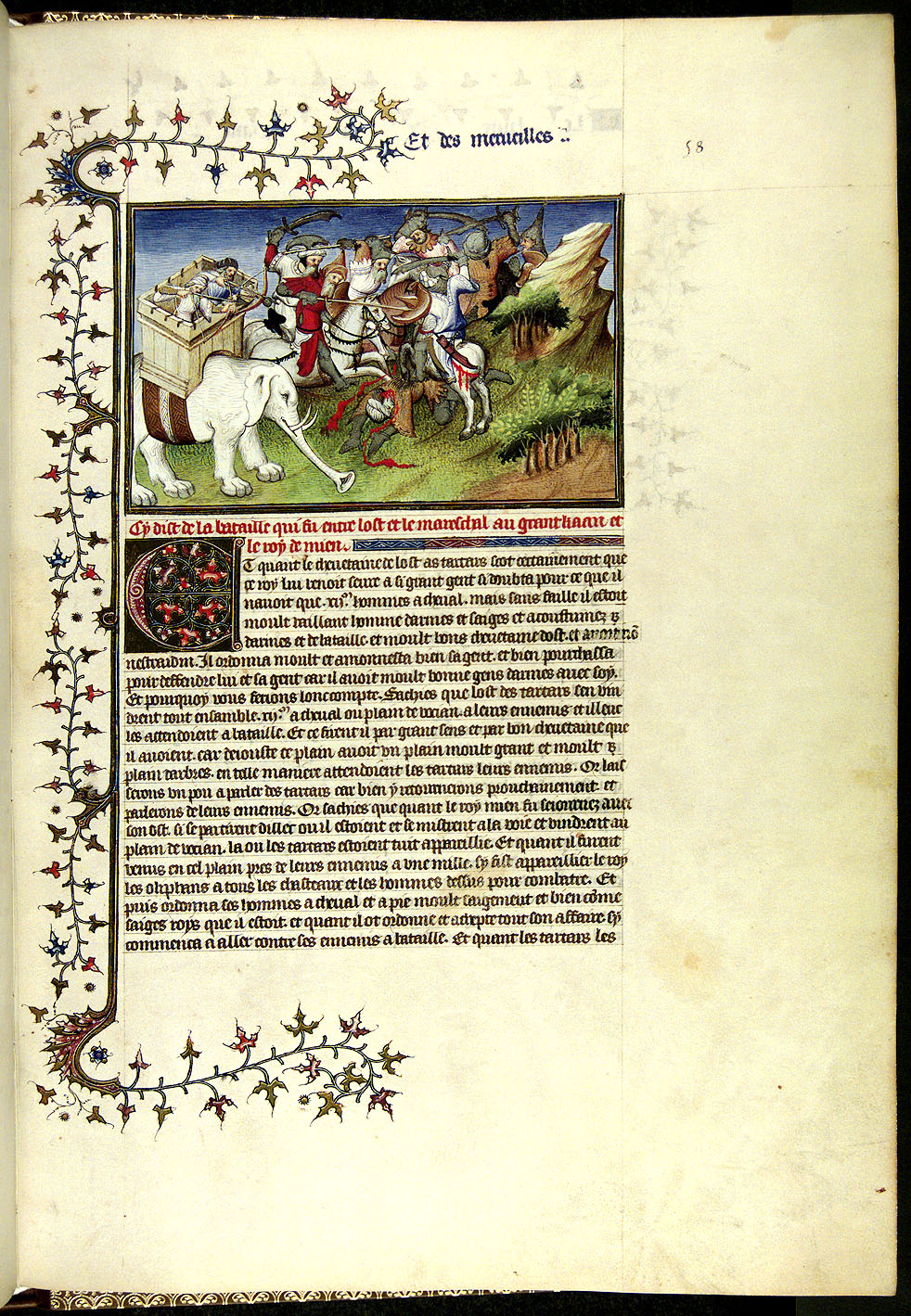
The final decline of the route came when large ships in the 15th century could travel with less cost and danger. However the geographical knowledge had grown immensely because of the routes as shown in the Catalan Map - a 14th century map made for Charles V of France in the middle ages. Also further details about China were aided by Marco Polo's account (1254 – 1324) he was a Christian merchant from the Venetian Republic whose travels were recorded in Il Milione, a book which introduced Europeans to Central Asia and China.

 'The Travels of Marco Polo' is a 13th-century travelogue written down by Rustichello da Pisa from stories told by Marco Polo. It describs travels through Asia, Persia, China, and Indonesia between 1271 and 1291
Lifted facts from a number of sources hopefully research will be appreciated by off spring in coming years!


Susan

The 'Venice of the East' - Zhujiajiao gondolla's and other delights!

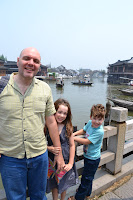
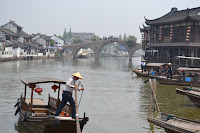
Gondolla's and Fangsheng Bridge
Zhujiajiao is a water canal town and is every thing you could imagine 'old China' to look like. So on one of our last days in Shanghai we ventured out on our own to see it, wanting the challenge - as Uncle Vic who lives in Shanghai was busy looking after sick cousin Flynn.

Our driver was racing Alex's rickshaw - we had the lighter load!

Arriving in Zhujiajiao
 Zhujiajiao is situated on a water canal 30 km west from Shanghai, it was during the Ming dynasty it flourished as a commercial centre. What remains today is a mix of Ming and Qing dynasty shopping alley ways, stone bridges and old town architecture. Of all its bridges the Fangsheng Bridge stands out, built in 1571 it spans 72 m has five arches and is the most photographed.
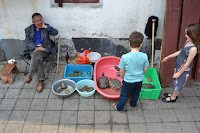
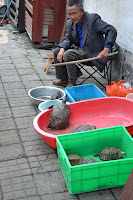
Lots of live turtles, snails and fish for sale.

Watch out for the turtle man - he has a stick!

No point trying to escape!

Zhujiajiao is about 1hr out of town by local bus. The adventure started just as we got settled in our seats. A fight broke out between an old Chinese lady who it appeared was unhappy about her seat allocation.  Yelling ensued with the driver and included the people at the front of the bus and us the only Westerners on it, she was waving her hands about and getting very agitated.  In the end she shuffled off to her seat at the back of the bus only once some other people moved and we showed her our seat numbers were correct. Phew!
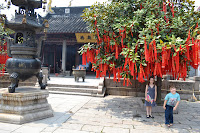
Under the offering tree at a Buddhist temple.

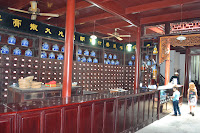
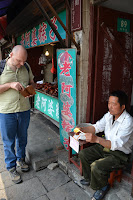
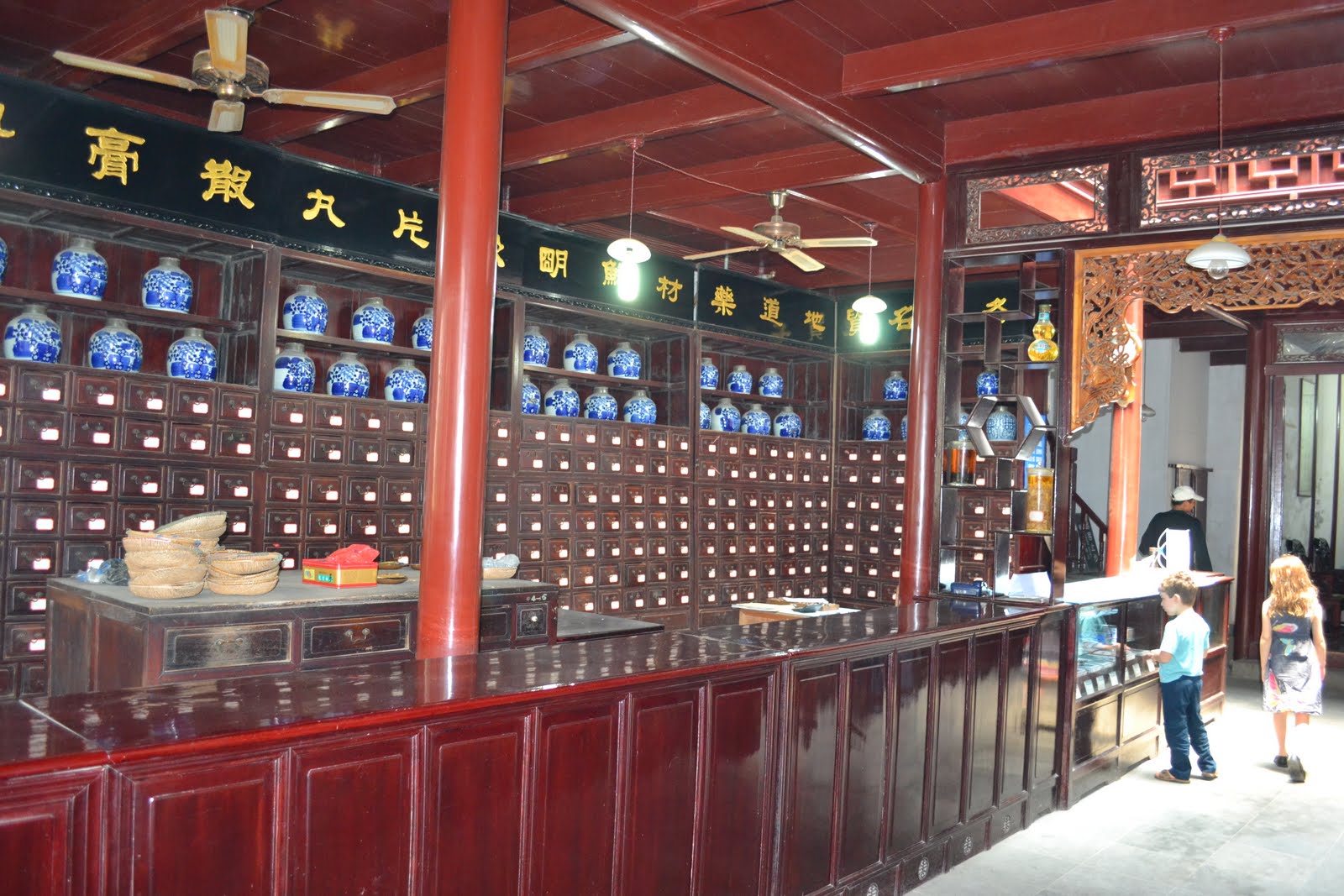
Visiting a traditional Chinese chemist.

Buying toffy goo on a stick.

When we arrived we were dropped out side the town centre so some enterprising local rickshaw drivers picked us up and gave us the grand tour of the towns alleys, bridges, temples, old post office, and an old Chinese herbalist shop. We really enjoyed wandering around the alleys looking at the food on offer (eg. marinated pork bits nimbly wrapped in leaves with rice), Alex tried the toffy goo sold on two sticks that you had to keep moving to avoid getting tarred! and the many shops selling tourist trinkets.
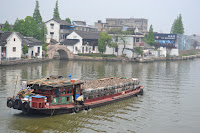
Canals still used for transporting agricultural products.

Taking in the sights of the market lanes.
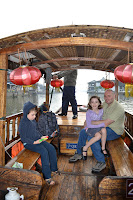
The town is gorgeous - a little Venice of the East. We had a gondola boat ride up one of the canals which was nice, it had an obvious slower pace to the larger towns and not many tourists - mostly Chinese day trippers


Most restaurants served stir fried frog, eel, fish, turtle and other meats. Not too appealing so we comically motioned a chicken laying an egg stirring in rice successfully and had a great meal of 'stirr fried egg and rice' in a lovely restaurant with only us in it and the happy family who were pleased to have us.
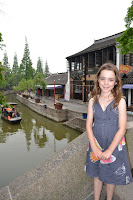


Hollander in front of the restaurant we went to for lunch.

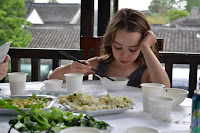
Chop stick savvy!

Haven't mentioned the toilets in China yet, usually not a great experience and hard to negotiate with the kids. Must always take your own paper and wipes. They are squat types sometimes with a bucket of water and always next to the kitchen which is a bit off putting.  So you usually have to walk past the cooks and tanks of fish/eels/and other critters to go.
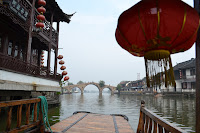
View from the gondola.


Relaxing on the canal.
 
We had a lovely day exploring the town until a sudden down pour happened in the afternoon for which we sheltered in a groovy little Tibetan tea house. When the storm past the kids ventured outside while we were finishing up in the cafe, we wondered what was engaging them next to the canal. Unfortunately the kids were a bit traumatized by finding a new kitten left out in a gutter which they wanted to look after. I had to explain that it was probably going to die with out its mother and that we couldn't bring it back to Australia - so began the howling which attracted alot of curiosity. Local shop keepers came out to see what the fuss was so we had to drag the kids away. Anyway all part of the adventure of traveling in a developing country.

Chillin at the Tibetan cafe.

The Chinese were great engineers, one of their greatest feats was to build The Grand Canal, which Zhujiajiao is apart of.  The canal started in 486BC and was built over a 1000 yrs making it the worlds largest man made water way. Its purpose was to link the Yangzi to the Yellow River and the towns along the way for trade - it spans from Beijing to Hangzhou. The rise of railway lead to its demise but it is still used for barges transporting agricultural produce and tourists wanting to see the decorative bridges and architecture of towns like Wuzhen,  Suzhou and of course Zhujiajiao.

We left Zhujiajiao feeling great about our independent adventure and glad that we made the effort.

Zai Jian!

Susan